

Art & Artifacts Record
Images
Metadata
Object Name |
Tile, Decorative |
Collection |
Artifact collection |
Object ID |
M1991.203.7 |
Year Range from |
1883 |
Year Range to |
1891 |
Dimension Details |
0 1/2" H x 4 1/4" W x 4 1/4" D |
Description |
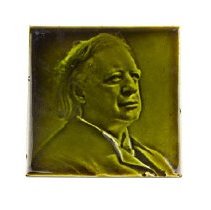
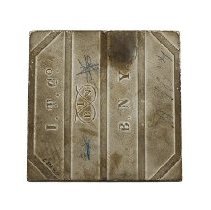
Green glazed tile with bust length portrait of Henry Ward Beecher; reverse signed 'HWB' in pencil with additional illegible markings. |
Place Names |
Brooklyn (New York, N.Y.) Brooklyn Heights (New York, N.Y.) |
Subject Headings |
Abolitionists Churches |
Personal and Corporate Names |
Beecher, Henry Ward, 1813-1887 Plymouth Church (Brooklyn, New York, N.Y.) |
Curatorial Notes |
Henry Ward Beecher (1813-1887) was one of the most well-known Brooklynites of the late nineteenth century. Son of famed Presbyterian minister Lyman Beecher, Henry Ward followed in his father’s footsteps and pursued a career in the church, taking up the pulpit at Brooklyn’s new Plymouth Church in 1847. From this seat, Beecher’s charisma, captivating preaching style, and outspoken opinions on the era’s most controversial social reforms—including temperance, women’s suffrage, and slavery—brought him national acclaim and, at times, notoriety. The mark on the back of this "photoceramic" tile featuring Beecher’s portrait indicates it was made by the International Tile Company in the mid-1880s, probably just before Beecher’s death in March 1887. A group of English investors founded the company five years earlier, in 1883, to produce "encaustic, geometrical, mosaic, and plain tile pavements" in America, setting up a factory in Brooklyn at 92 Third Street. The business was short-lived. In 1886, the English owners sold their shares to the proprietors of Brooklyn’s Arbuckle Coffee Company, who likely carried on manufacturing simple undecorated tiles only until 1891. |